PCI DSS compliance, from readiness through validation

Thoropass brings PCI DSS readiness, evidence collection, vulnerability scanning, penetration testing, and assessment into one connected experience, with experienced PCI professionals involved throughout.

Man with glasses and beard in a blue suit speaking on a phone while looking at a laptop, with colorful curved shapes behind and a message saying 'Ready for validation: Readiness, evidence, scans, pentesting' with a green check mark.

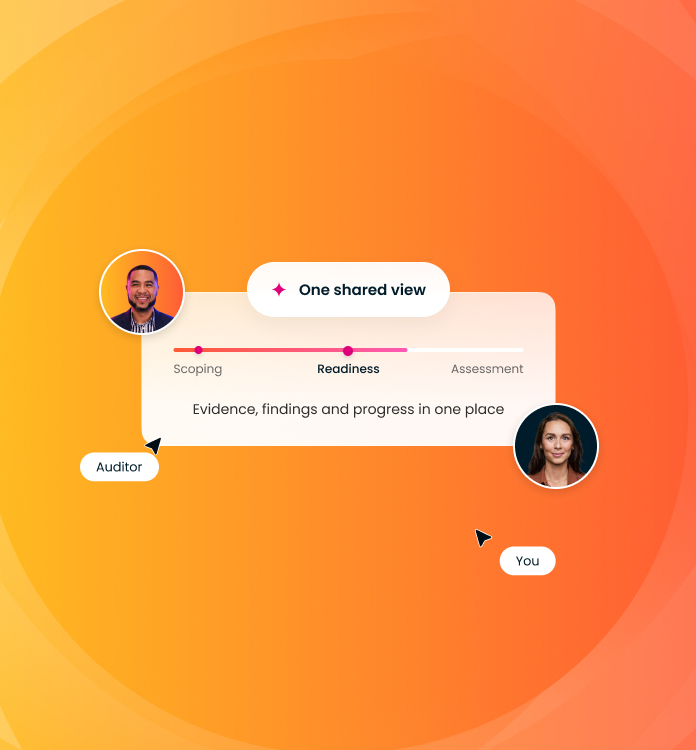
A connected path from scope to assessment

Scope

Your PCI readiness team works with you to understand your payment environment, cardholder data flows, CDE, annual transaction volume, and other factors that affect your PCI DSS scope and validation requirements.

Prepare

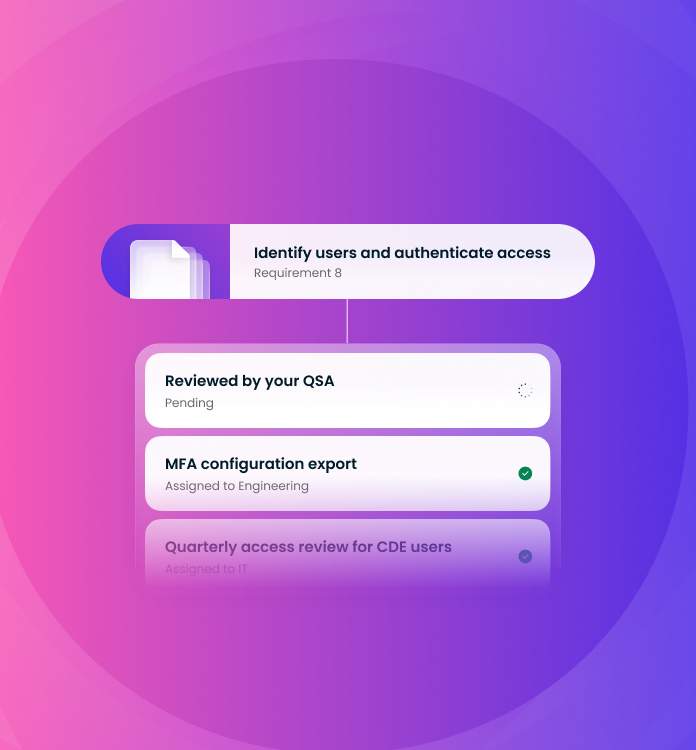
Thoropass translates your requirements into organized controls, tasks, and evidence requests. Your readiness team gets visibility into what needs to be completed and guidance when a requirement needs additional context.

Validate

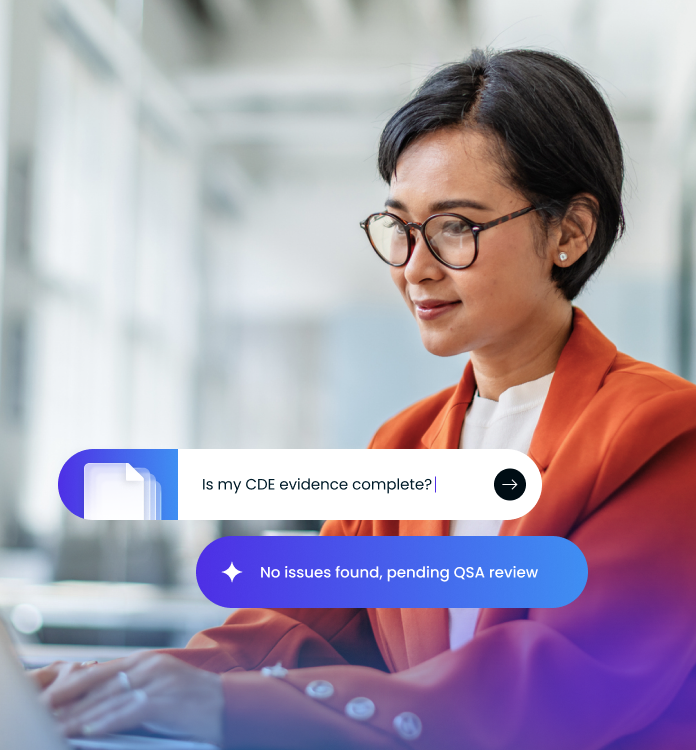
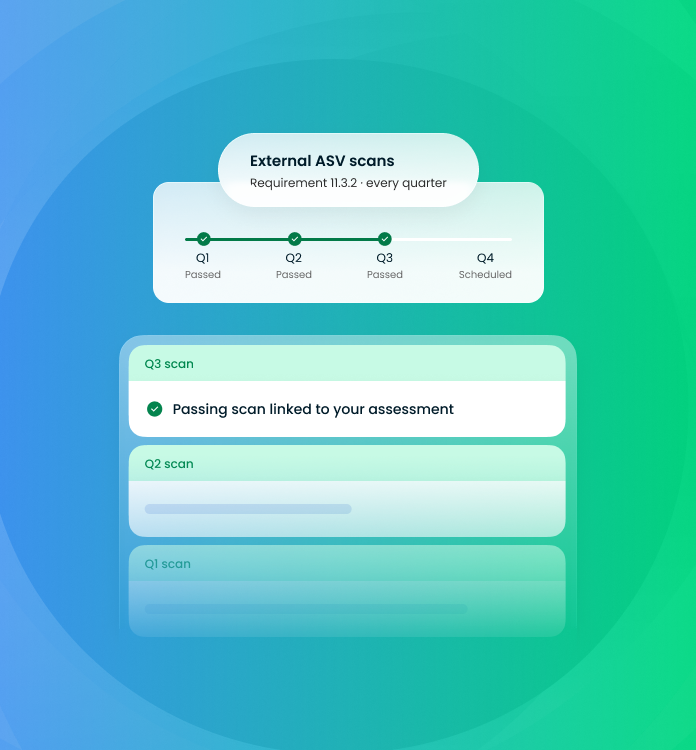
Integrations and AI-powered workflows help collect and organize evidence while your readiness team completes applicable security activities such as ASV scans and penetration testing. Your PCI readiness team reviews progress and helps identify gaps before assessment.

Assess

When an independent assessment is required, your assessment QSA evaluates the applicable PCI DSS requirements and supporting evidence. The compliance and assessment processes remain connected, reducing handoffs and giving both teams a shared view of the work.

Let’s talk audit

We’re here to help cut through endless audit overhead. Let’s connect to discuss your needs and see how Thoropass can help streamline your audit process.

Frequently asked questions

What is PCI DSS?

The Payment Card Industry Data Security Standard, or PCI DSS, is a global information security standard designed to protect account data. It applies to organizations that store, process, or transmit cardholder data or sensitive authentication data, as well as organizations that can affect the security of the cardholder data environment.

PCI DSS establishes a baseline of technical and operational security requirements covering areas such as network security, account data protection, vulnerability management, access controls, monitoring, testing, and security policies.

What is PCI DSS v4.0.1?

PCI DSS v4.0.1 is the current version of the PCI Data Security Standard. The PCI Security Standards Council published it as a limited revision to PCI DSS v4.0, incorporating clarifications and corrections while maintaining the standard's overall structure and intent.

Organizations subject to PCI DSS should evaluate their environments against the applicable PCI DSS v4.0.1 requirements and current validation documentation.

Who needs to comply with PCI DSS?

PCI DSS applies to entities that store, process, or transmit cardholder data or sensitive authentication data, including merchants, processors, acquirers, issuers, and service providers. It can also apply to organizations whose systems could affect the security of a cardholder data environment.

The specific validation requirements depend on factors such as the organization's role, payment environment, transaction volume, payment brands, and acquiring bank requirements. It's important to note that PCI SSC maintains the standard but does not set validation levels or reporting requirements — the individual payment brands and your acquirer do.

What is a QSA?

A Qualified Security Assessor (QSA) is a security professional qualified through the PCI Security Standards Council's QSA program to perform PCI DSS assessments. QSAs work for Qualified Security Assessor Companies and evaluate whether applicable PCI DSS requirements have been met.

Organizations that require a formal PCI DSS assessment may work with a QSA to complete their assessment and applicable reporting documentation.

What is a QSAC?

A Qualified Security Assessor Company, or QSAC, is an independent security organization qualified by the PCI Security Standards Council to perform PCI DSS assessments. Thoropass is a QSAC and provides QSA-led PCI DSS assessment services as part of its end-to-end PCI capabilities.

What is an ASV scan?

An Approved Scanning Vendor, or ASV, is an organization approved by the PCI Security Standards Council to perform external vulnerability scans in accordance with applicable PCI DSS requirements.

Organizations that are required to complete ASV scans generally perform them at defined intervals and after certain significant changes. Req. 11.3.2 requires external scans at least once every three months by a PCI SSC ASV, with rescans as needed until a passing scan is achieved under the ASV Program Guide. And Req. 11.3.2.1 — external scans after a significant change — explicitly states they're performed by qualified personnel with organizational independence and are NOT required to be run by a QSA or ASV. Thoropass provides PCI SSC-approved ASV scanning within its PCI DSS offering.

What is the difference between an SAQ and a Report on Compliance?

A Self-Assessment Questionnaire (SAQ) is a PCI DSS validation tool used by eligible organizations to evaluate and report their compliance with applicable requirements.

A Report on Compliance (ROC) documents the results of a formal PCI DSS assessment performed by a QSA or, where permitted, an ISA, for organizations required to undergo that type of validation. The appropriate validation method depends on the organization's circumstances and requirements from payment brands or acquiring institutions. An Attestation of Compliance (AOC) accompanies both routes and is typically what is submitted to the acquirer.

Does PCI DSS require penetration testing?

PCI DSS includes penetration testing requirements for applicable environments. The frequency for this should be: internal and external penetration tests at least every 12 months and after significant change (11.4.2, 11.4.3); segmentation testing at least every 12 months generally (11.4.5) and at least every six months for service providers (11.4.6).

Thoropass provides penetration testing services that can be coordinated with the broader PCI DSS compliance and assessment process, helping teams connect findings, remediation, controls, and audit evidence.

How does PCI DSS compliance software help?

PCI DSS compliance software can help teams organize controls, collect evidence, monitor progress, document remediation, and maintain visibility across an assessment.

Thoropass connects that work directly with PCI experts, ASV scanning, penetration testing, and audit workflows. This gives organizations one place to manage both the operational work of PCI DSS compliance and the independent validation process.